2024–2025 · MMKPC Studios · In development
RHM: The Foundation
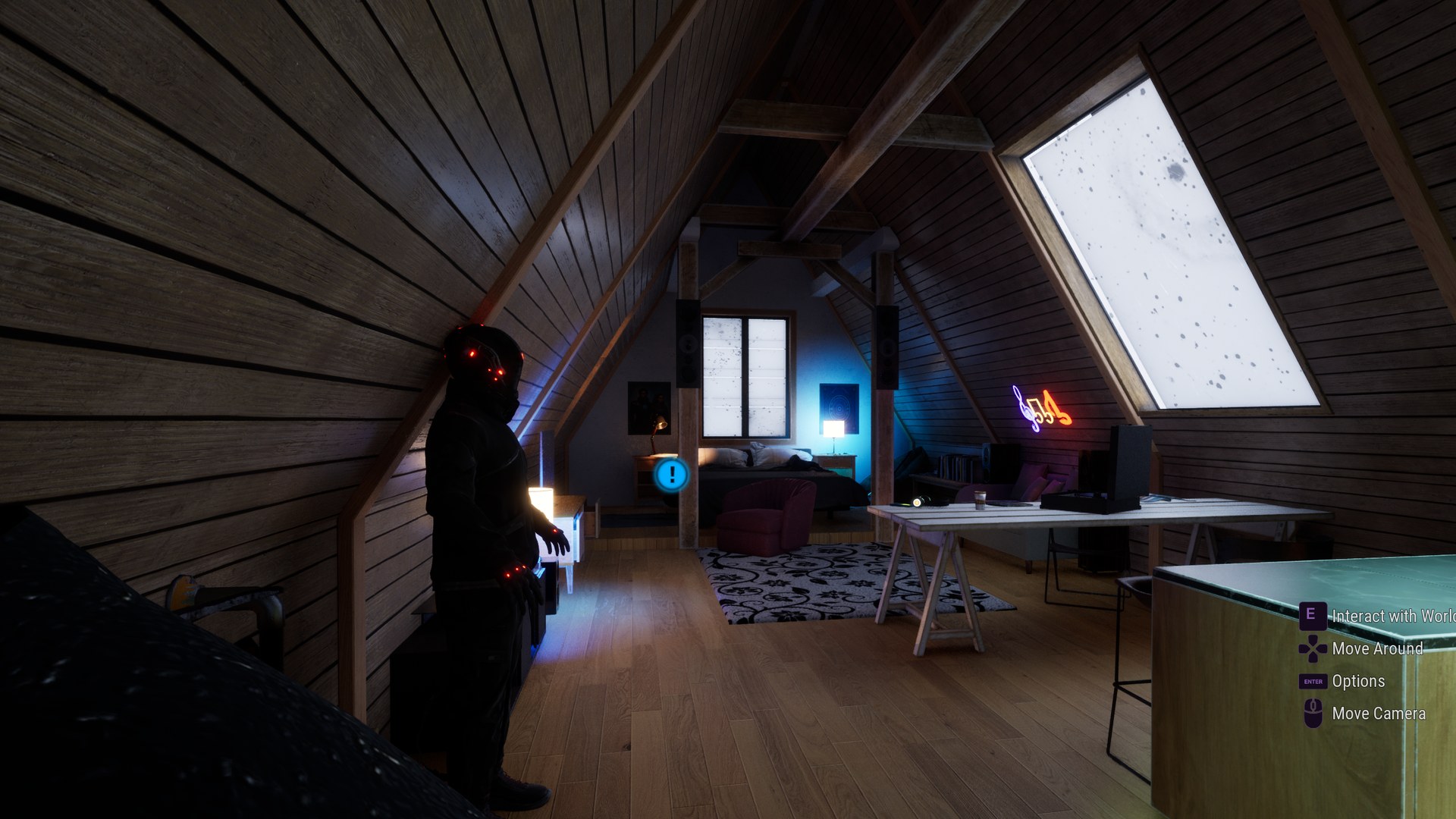
A third-person game in the RhythmVerse. I authored diegetic holograms in the material editor, built the attic they belong to, and laid out a secret stage whose Niagara effects change color and intensity with the song. I also managed the prop assets so they stayed inside acceptable size and budget.
- Role
- Prop designer & level designer
- Platforms
- PC · Steam
- Focus
- Environment · Props · Level
The problem
Holograms can look like glass planes if the material isn’t doing enough. An attic can look like furniture dropped on a greybox if the dressing doesn’t belong together. The secret stage needed its own language — particles that listen to the music instead of looping the same burst. I also had to keep the prop set inside the project’s size and budget so the room still loaded.
The loop
- Pattern
- Dress
- Stage
What I owned
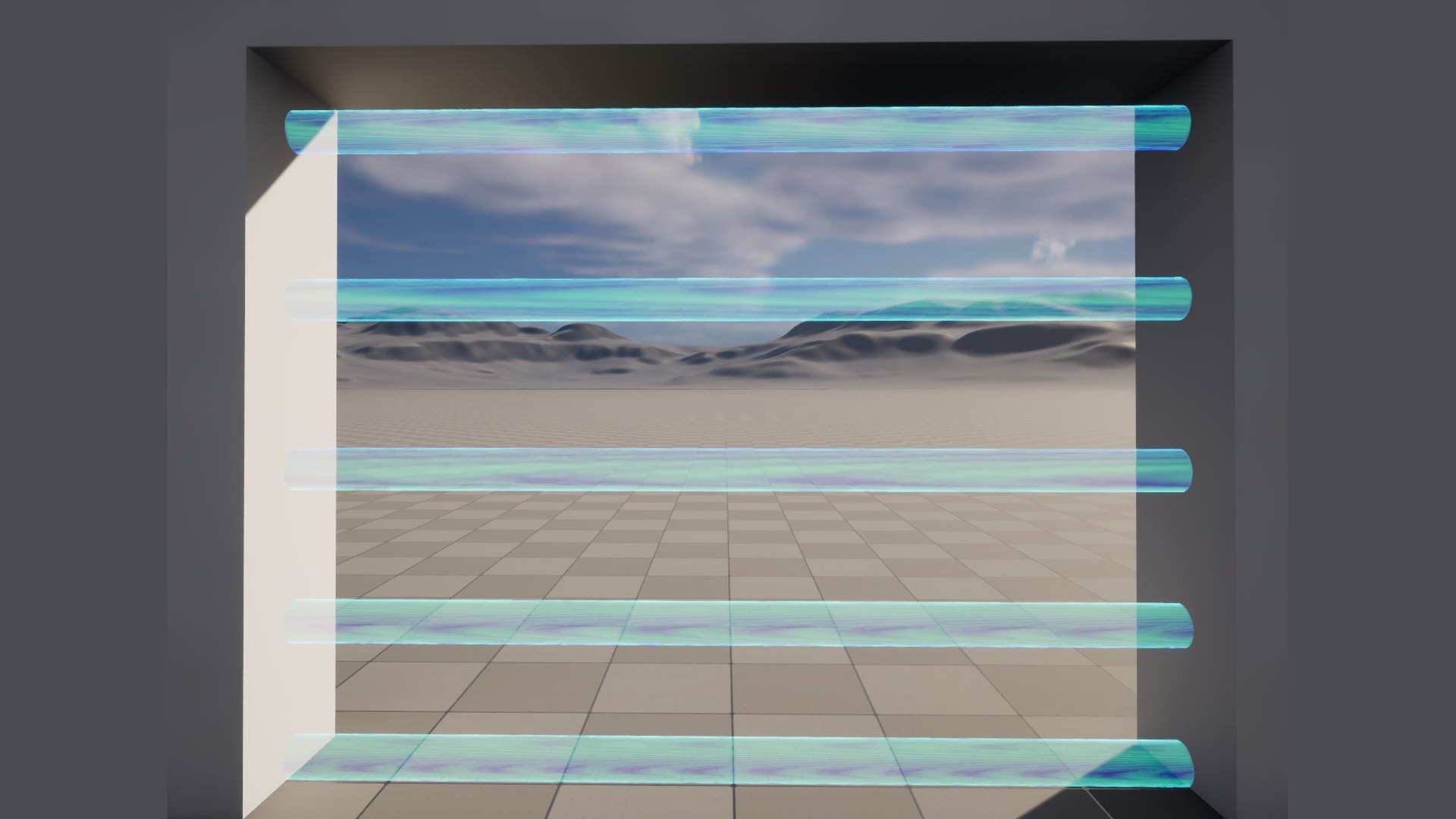
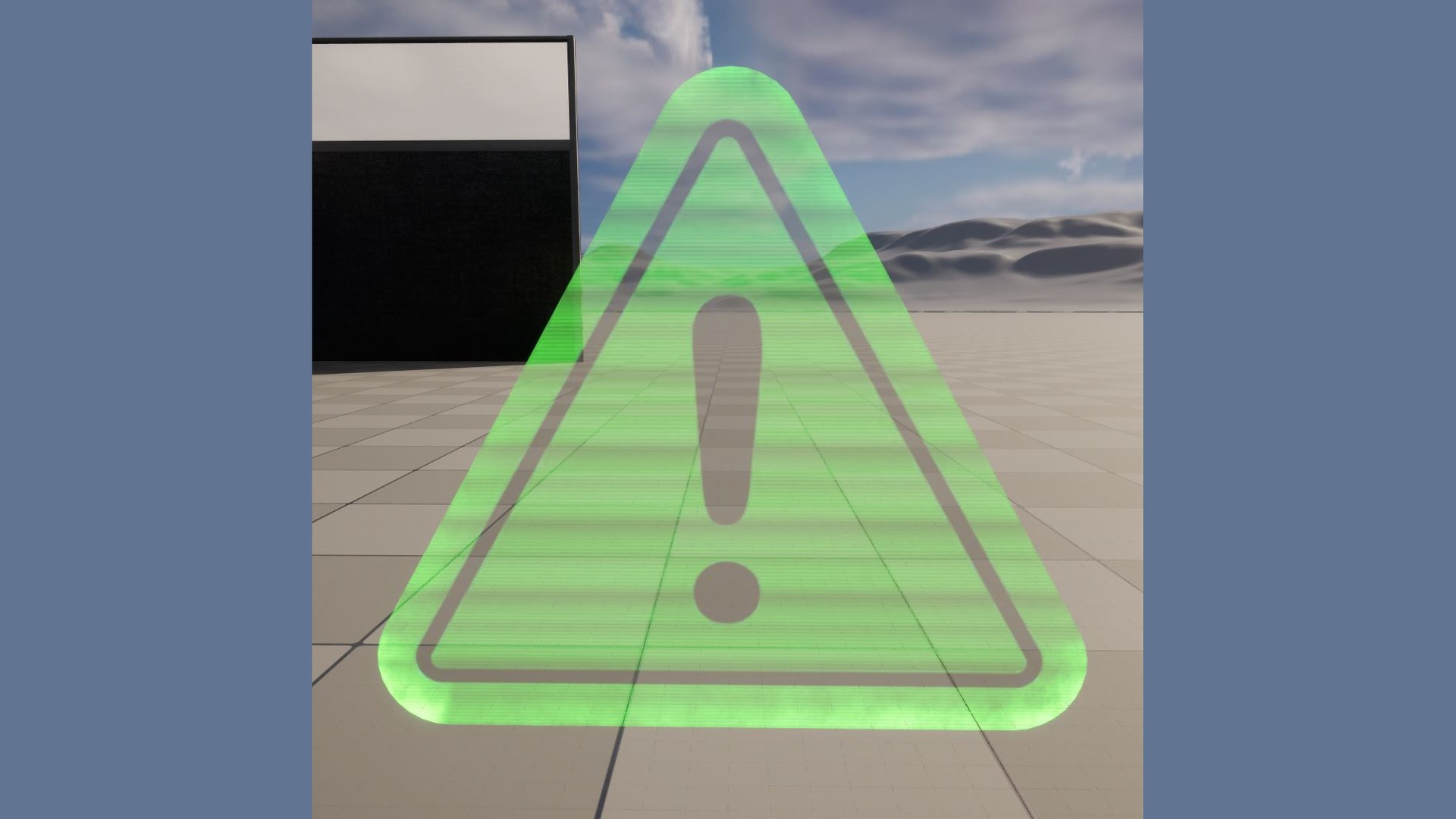
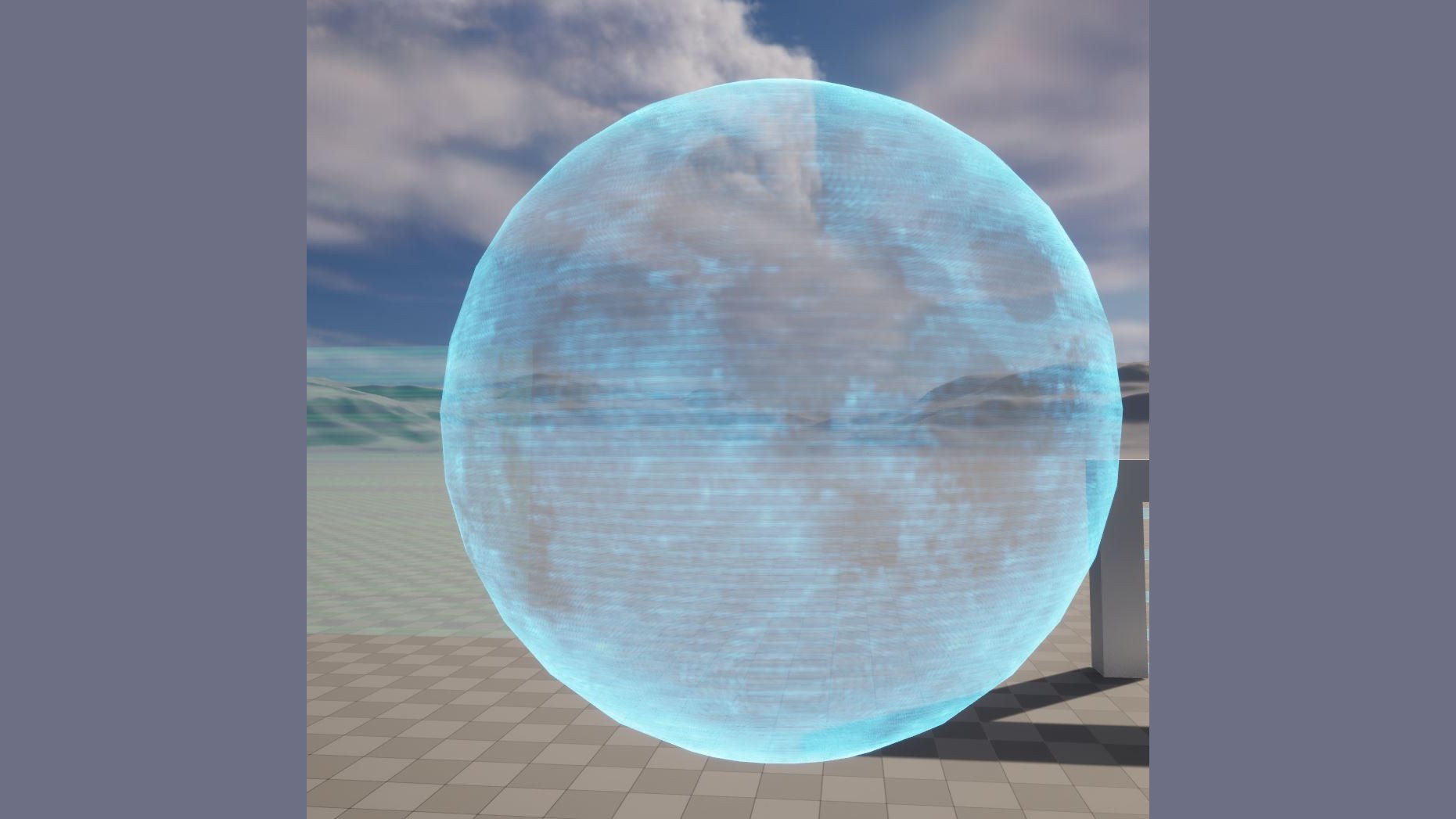
- Hologram set as diegetic UI: bars, caution, barrier, sphere, terminal — patterned in the material editor
- Attic structure: timber, loft, openings
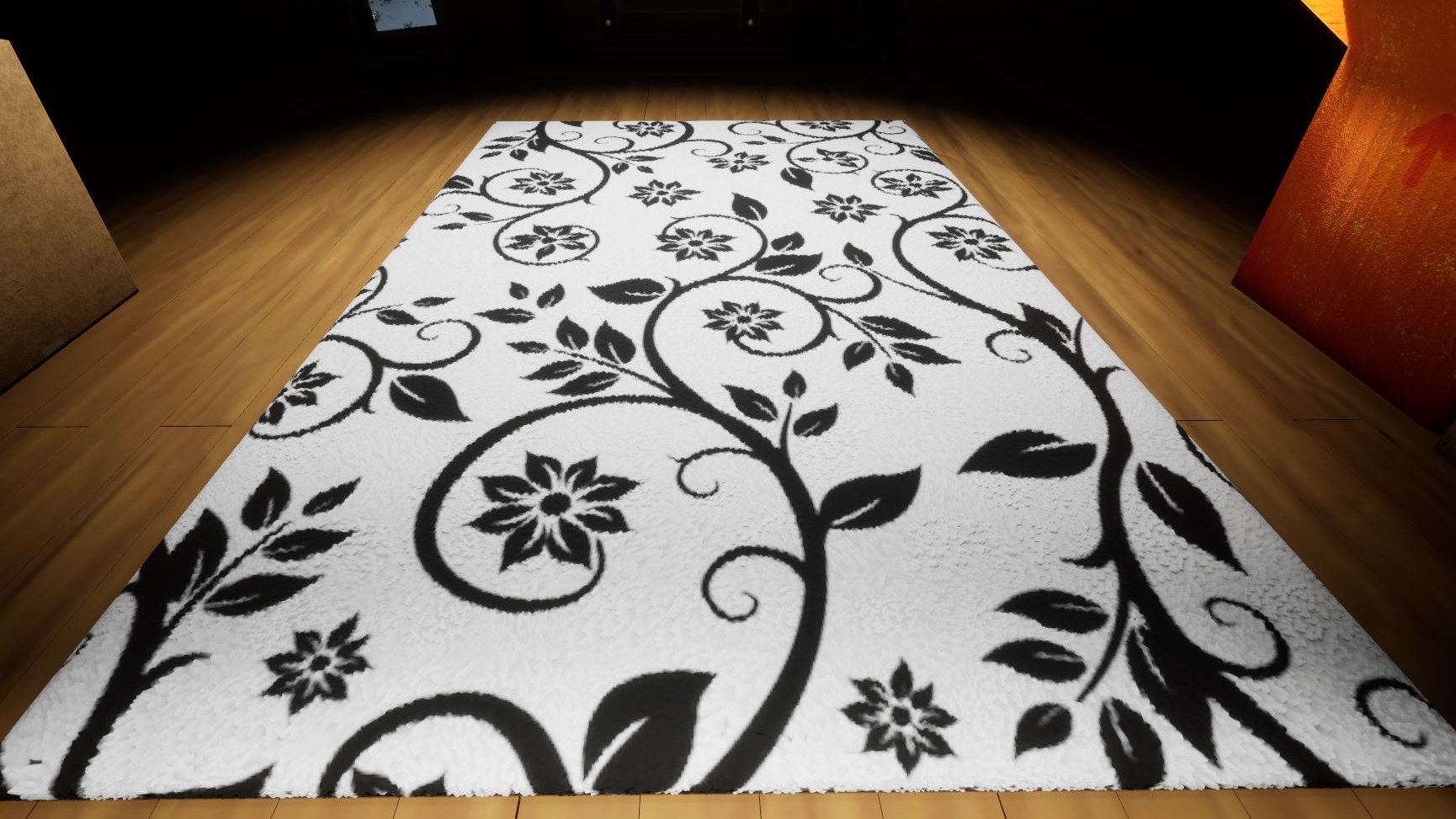
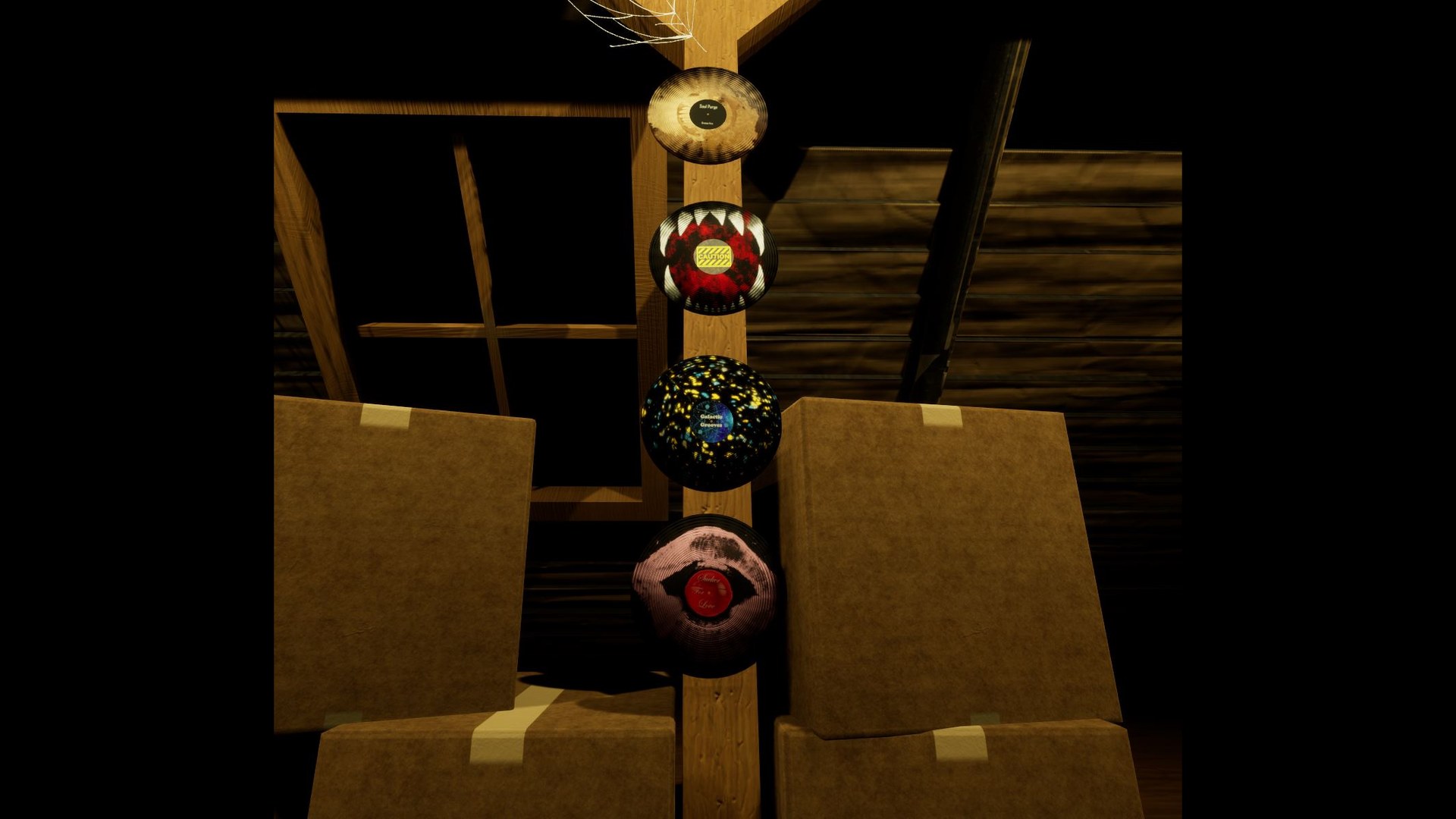
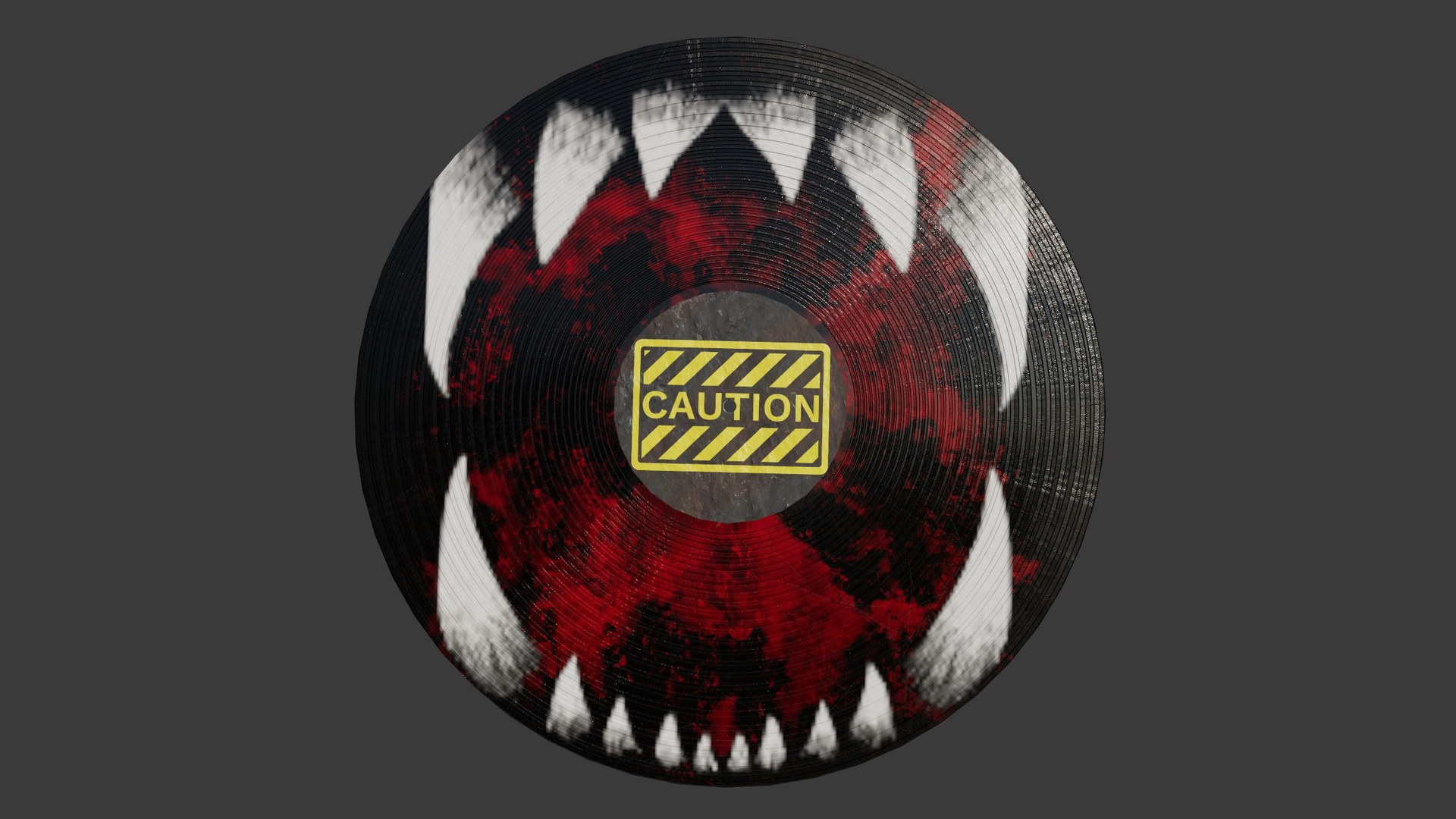
- Area rug, neon music signs, and a vinyl set
- Secret stage level with custom audio-reactive Niagara (color and intensity follow the song)
- Prop asset management so meshes stayed inside acceptable parameters
Secret stage
Stills
Process
01
Pattern first
The holograms started in the material editor — scanlines, falloff, a warning that still reads as a triangle. Once the pattern felt right on a plane, it could move onto a bar or a moon. That work sits next to my thesis: information that belongs in the space.
02
Dress the attic
Structure first, then the things that suggest someone lives there: rug, neon, a beam of vinyl. I kept the prop set inside the budget so the room stayed light enough to play in.
03
Hide a stage
The secret level is a DJ booth over water, then a particle tunnel. Custom Niagara, driven by the audio — color and intensity shift with the song instead of playing a canned loop.
Outcome
An attic that feels occupied, holograms you can treat as world UI, and a hidden stage that actually listens to the track.